Think back to the last time you needed to find a plumber, a dentist, or a good Italian restaurant in an unfamiliar neighborhood. You probably didn’t ask anyone. You pulled out your phone and searched. That behavior quick, specific, location-aware search happens hundreds of times a day in your market. The question isn’t whether it’s happening. It’s whether your business shows up when it does.
The Modern Discovery Path Is Not a Straight Line
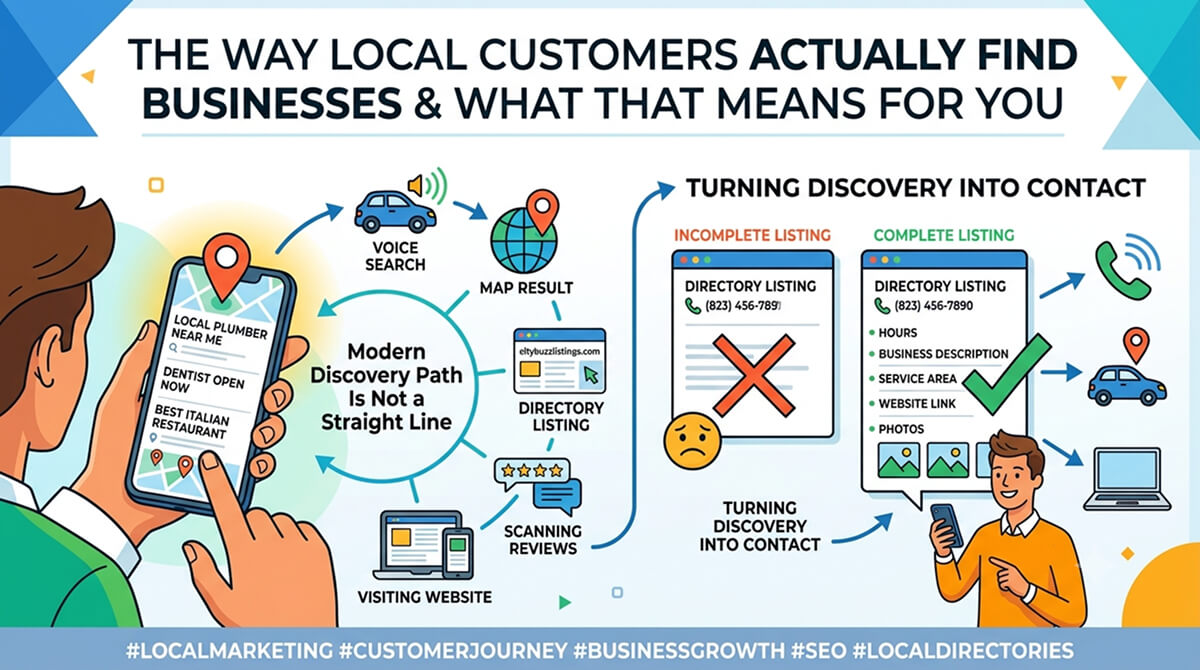
Customers don’t find businesses the way they used to. It’s rarely a single search, a single site, a single decision. Most of the time the path looks something like this: a voice search in the car, a map result, a directory listing, a quick scan of reviews, maybe a visit to the business website. By the time someone calls you, they’ve already made several smaller decisions about whether you seem trustworthy.
Each of those touchpoints is an opportunity and a potential failure point if your information isn’t there or isn’t accurate. A gap in your online presence at any stage of that path can send a customer to a competitor without you ever knowing it happened.
Why Local Directories Are Still Part of That Path
Directories get dismissed sometimes as outdated, but the search behavior tells a different story. People search within directories. They filter by category and location. They read listing details before deciding whether to click through. Platforms like citybuzzlistings.com serve users who are specifically trying to find businesses in their area which means visitors on those listings are genuinely looking, not casually browsing.
That’s a meaningfully different kind of traffic than a display ad impression. It’s demand-driven. Someone who finds your listing there is already looking for what you offer, in your area. That’s a very short funnel.
The Role of Information Completeness in Turning Discovery Into Contact
Discovery only converts when the information a customer finds is actually useful. A listing that shows only a name and a phone number is a partial answer. A listing that includes hours, a business description, your service area, and a link to your website gives someone everything they need to take the next step confidently.
The investment in completing your listings thoroughly is genuinely small. The cost of an incomplete listing is an opportunity that quietly walks away, often more than once a day.
Frequently Asked Questions
How do customers find local businesses when they don't start on Google?
Many customers use directories, review platforms, map apps, and voice assistants that pull from multiple data sources. Having accurate listings across these channels means you're findable regardless of where someone starts their search which matters as search behavior continues to diversify.
Does it help to be on local business directories in addition to Google Business Profile?
Absolutely. Google Business Profile is essential, but it's not the only place customers look. Local directories reach people in different moments of the decision journey often people who are specifically comparison shopping or browsing categories rather than already knowing your name.
What makes someone choose one local business over another after finding both in a directory?
Typically: more complete information, better photos, recent reviews, and a clearer service description. The business that answers the most questions without requiring the customer to dig further usually wins the click and often wins the call.
How do I know if my directory listings are actually sending me customers?
Ask new customers how they found you many will mention directories without prompting. Some platforms also provide view counts and click-through data in a business dashboard. Track what you can, but don't underestimate how often directory-driven discovery goes unattributed.
Do I need to update my directory listings regularly?
When your information changes, yes immediately. Otherwise, a quarterly accuracy check is usually sufficient. Outdated information is one of the most common reasons customers get frustrated mid-search and choose a competitor instead of you.